 iTEL
iTEL
Search results: 45
![AK21103 PRINSIP PERHUBUNGAN AWAM [1-2025/2026]](https://itel.ums.edu.my/pluginfile.php/1586051/course/overviewfiles/Latif%20Lai%20Water%20Colour.png)
AK21103 PRINSIP PERHUBUNGAN AWAM [1-2025/2026]
This course introduces students to the foundational concepts and practices of public relations, tracing its historical evolution and examining its role in contemporary society. It provides a comprehensive overview of definitions, key theories, principles, and strategic planning approaches in communication management. Students will also explore career pathways and professional ethics within the field of public relations.
ABOUT THE LECTURER
Dr Lai is a Senior Lecturer in Communication at Universiti Malaysia Sabah (UMS), specialising in strategic communication and public engagement. As the head of the UMS–UNICEF C4D Research Unit, Dr Lai brings extensive experience in Social and Behaviour Change Communication (SBCC), working with government agencies, NGOs, and community stakeholders. His academic work bridges theory and practice, with a strong emphasis on ethical communication, strategic planning, and the societal impact of public relations. Dr Lai is passionate about guiding students to critically explore the evolution, principles, and professional pathways of public relations, equipping them with the analytical and practical skills needed to thrive in today’s dynamic communication landscape.
ABOUT THE LECTURER
Dr Lai is a Senior Lecturer in Communication at Universiti Malaysia Sabah (UMS), specialising in strategic communication and public engagement. As the head of the UMS–UNICEF C4D Research Unit, Dr Lai brings extensive experience in Social and Behaviour Change Communication (SBCC), working with government agencies, NGOs, and community stakeholders. His academic work bridges theory and practice, with a strong emphasis on ethical communication, strategic planning, and the societal impact of public relations. Dr Lai is passionate about guiding students to critically explore the evolution, principles, and professional pathways of public relations, equipping them with the analytical and practical skills needed to thrive in today’s dynamic communication landscape.
AT10302 (UMSFLEC) PENGANTAR PENGAJIAN ISLAM [1-2025/2026]
Kursus ini membincangkan pengertian dan ciri-ciri Islam. Penumpuan diberikan terhadap sumber-sumber Pengajian Islam, ruang lingkup Pengajian Islam yang meliputi akidah, akhlak dan syariah. Kursus ini turut membincangkan isu-isu semasa yang melibatkan Pengajian Islam dan cabaran kontemporari yang dihadapi dalam bidang Pengajian Islam.
![AT10502(UMSFLEC) FIQH AL-IBADAH [1-2025/2026]](https://itel.ums.edu.my/pluginfile.php/1710216/course/overviewfiles/ME%20AT10502%20%281%29.jpg)
AT10502(UMSFLEC) FIQH AL-IBADAH [1-2025/2026]
Kursus ini menghuraikan tentang hukum-hukum syariat Islam melalui aplikasi amalan dalam mendepani realiti masyarakat hari ini. Kursus ini bertujuan untuk menjelaskan tatacara pelaksanaan ibadah umum dan khusus seperti syahadah, solat, puasa, zakat, haji dan umrah. Di akhir kursus ini, pelajar diharap dapat memahami hukum-hukum Islam, mengaplikasikan serta berkebolehan menjawab persoalan hal ehwal semasa yang berbangkit dalam kalangan masyarakat berdasarkan dalil-dalil dari al-Qur’an dan al-Hadis serta pandangan para ulama salaf, khalaf dan Ijma serta Qias.
![BP24103 PERCUKAIAN I [2-2025/2026]](https://itel.ums.edu.my/pluginfile.php/1906207/course/overviewfiles/WhatsApp%20Image%202026-03-10%20at%2014.45.57.jpeg)
BP24103 PERCUKAIAN I [2-2025/2026]
Course Description
This course provides an introduction to the Malaysian income tax system based on the Income Tax Act 1967. It explains the basic principles and objectives of taxation, sources of government revenue, and the role of the Inland Revenue Board of Malaysia in tax administration. The course covers the determination of individual residence status, taxation of employment income, capital allowances, and business income for sole proprietorships and partnerships. It also discusses other sources of income such as dividends, interest, rental, and royalties.
Students will learn how to compute individual tax liability, including aggregate income, total income, chargeable income, personal reliefs, tax rebates, and applicable tax rates. The course also introduces tax administration procedures, e-filing through the MyTax Portal, and ethical issues in taxation to encourage responsible tax compliance.
Learning Outcomes
At the end of the course the students will be able to:
1. Analyze the scope and implementation of the tax system and the obligations of taxpayers in Malaysia (PLO1, C4)
2. Evaluate various tax strategies on different circumstances according to the current Malaysian taxation system (PLO2, C5)
3. Collaborate effectively in analyzng tax dilemmas regarding tax evasion and the implementation of 'Aadab' in tax compliance (PLO4, A3)
4. Exhibit digital literacy in data search for current tax compliance environment in Malaysia (PLO6, C5)
![EJ12101 (SEKSYEN 101) UMS SEJATI BOMBA DAN PENYELAMAT I UMSKAL [1-2025/2026]](https://itel.ums.edu.my/pluginfile.php/1695975/course/overviewfiles/UMS%20SEJATI%20I%20BOMBA%20DAN%20PENYELAMAT.jpeg)
EJ12101 (SEKSYEN 101) UMS SEJATI BOMBA DAN PENYELAMAT I UMSKAL [1-2025/2026]
Penerapan Ilmu Kebombaan kepada Para Pelajar Sem 1 2025/2026j
PEGAWAI BOMBA KANAN II ( TBK I ) MOHD FAIZAL BIN SAIDIN ( JURULATIH )
PEGAWAI BOMBA MOHD AFFIFI BIN ZAINAL@JAINAL ( DEMO )
Mengeratkan siratulrahim diantara para pelajar dan jurulatih dari berbagai bangsa dan agama serta memupuk kerjasama didalam satu pasuan atau satu keluarga yang besar.
#mentalfizikalkenakuat
#mentalfizikalkenakuat
#disiplinkandiri
#jadilahorangyangbergunakepadabangsadannegara
#masaituemas
#usahatanggakejayaan
![EJ12101(SEKSYEN 101-UMSKAL) UMS SEJATI I - BOMBA & PENYELAMAT [1-2023/2024]](https://itel.ums.edu.my/pluginfile.php/492875/course/overviewfiles/UMS%20SEJATI%20I%20BOMBA%20DAN%20PENYELAMAT.jpeg)
EJ12101(SEKSYEN 101-UMSKAL) UMS SEJATI I - BOMBA & PENYELAMAT [1-2023/2024]
Penerapan Ilmu Kebombaan kepada Para Pelajar Sem 1 2023/2024
JURULATIH PBK II ( KUP ) MOHD FAIZAL BIN SAIDIN & ( DEMO) MOHD AFFIFI BIN ZAINAL@JAINAL
Mengeratkan siratulrahim diantara para pelajar dan jurulatih dari berbagai bangsa dan agama serta memupuk kerjasama didalam satu pasukan atau satu keluarga yang besar.
#mentalfizikalkenakuat
#disiplinkandiri
#jadilahorangyangbergunakepadabangsadannegara
#masaituemas
#usahatanggakejayaan
JURULATIH PBK II ( KUP ) MOHD FAIZAL BIN SAIDIN & ( DEMO) MOHD AFFIFI BIN ZAINAL@JAINAL
Mengeratkan siratulrahim diantara para pelajar dan jurulatih dari berbagai bangsa dan agama serta memupuk kerjasama didalam satu pasukan atau satu keluarga yang besar.
#mentalfizikalkenakuat
#disiplinkandiri
#jadilahorangyangbergunakepadabangsadannegara
#masaituemas
#usahatanggakejayaan
![EJ12201(SEKSYEN 101) UMS SEJATI (BOMBA DAN PENYELAMAT) II [2-2025/2026]](https://itel.ums.edu.my/pluginfile.php/1909429/course/overviewfiles/UMS%20SEJATI%20I%20BOMBA%20DAN%20PENYELAMAT.jpeg)
EJ12201(SEKSYEN 101) UMS SEJATI (BOMBA DAN PENYELAMAT) II [2-2025/2026]
Penerapan Ilmu Kebombaan kepada Para Pelajar Sem 1 2025/2026
PEGAWAI BOMBA KANAN II ( TBK I ) MOHD FAIZAL BIN SAIDIN ( JURULATIH )
PEGAWAI BOMBA MOHD AFFIFI BIN ZAINAL@JAINAL ( DEMO )
Mengeratkan siratulrahim diantara para pelajar dan jurulatih dari berbagai bangsa dan agama serta memupuk kerjasama didalam satu pasuan atau satu keluarga yang besar.
#mentalfizikalkenakuat
#mentalfizikalkenakuat
#disiplinkandiri
#jadilahorangyangbergunakepadabangsadannegara
#masaituemas
#usahatanggakejayaan
PEGAWAI BOMBA KANAN II ( TBK I ) MOHD FAIZAL BIN SAIDIN ( JURULATIH )
PEGAWAI BOMBA MOHD AFFIFI BIN ZAINAL@JAINAL ( DEMO )
Mengeratkan siratulrahim diantara para pelajar dan jurulatih dari berbagai bangsa dan agama serta memupuk kerjasama didalam satu pasuan atau satu keluarga yang besar.
#mentalfizikalkenakuat
#mentalfizikalkenakuat
#disiplinkandiri
#jadilahorangyangbergunakepadabangsadannegara
#masaituemas
#usahatanggakejayaan
![EJ12201(SEKSYEN 101) UMS SEJATI BOMBA & PENYELAMAT II UMSKAL [2-2023/2024]](https://itel.ums.edu.my/pluginfile.php/774591/course/overviewfiles/UMS%20SEJATI%20II%20BOMBA%20DAN%20PENYELAMAT.jpeg)
EJ12201(SEKSYEN 101) UMS SEJATI BOMBA & PENYELAMAT II UMSKAL [2-2023/2024]
Penerapan Ilmu Kebombaan kepada Para Pelajar Sem 2 2023/2024
JURULATIH PBK II ( KUP ) MOHD FAIZAL BIN SAIDIN & ( DEMO ) MOHD AFFIFI BIN ZAINAL@JAINAL
Mengeratkan siratulrahim diantara para pelajar dan jurulatih dari berbagai bangsa dan agama serta memupuk kerjasama didalam satu pasukan atau satu keluarga yang besar.
#mentalfizikalkenakuat
#disiplinkandiri
#jadilahorangyangbergunakepadabangsadannegara
#masaituemas
#usahatanggakejayaan
EJ14101 UMS SEJATI (KEMBARA) I [1-2023/2024]
Kursus Kokurikulum KEMBARA merangkumi beberapa aspek pembelajaran luar kelas yang diinspirasikan daripada Pengakap seperti asas berkhemah, asas ikatan dan simpulan, masakan rimba, kawad kaki dan banyak lagi.
Pelajar didedahkan dengan pembelajaran luar kelas bagi memberikan mereka pengalaman yang lebih menarik dan luas serta melatih pelajar menjadi lebih berdisiplin.
Pelajar didedahkan dengan pembelajaran luar kelas bagi memberikan mereka pengalaman yang lebih menarik dan luas serta melatih pelajar menjadi lebih berdisiplin.
![EJ22301(SEKSYEN 101) UMS SEJATI BOMBA DAN PENYELAMAT 3 UMSKAL [1-2024/2025]](https://itel.ums.edu.my/pluginfile.php/1087103/course/overviewfiles/UMS%20SEJATI%20I%20BOMBA%20DAN%20PENYELAMAT.jpeg)
EJ22301(SEKSYEN 101) UMS SEJATI BOMBA DAN PENYELAMAT 3 UMSKAL [1-2024/2025]
Penerapan Ilmu Kebombaan kepada Para Pelajar Sem 3 2024/2025
JURULATIH PBK II ( KUP ) MOHD FAIZAL BIN SAIDIN & ( DEMO) PB MOHD AFFIFI BIN ZAINAL@JAINAL
Mengeratkan siratulrahim diantara para pelajar dan jurulatih dari berbagai bangsa dan agama serta memupuk kerjasama didalam satu pasukan atau satu keluarga yang besar.
#mentalfizikalkenakuat
#disiplinkandiri
#jadilahorangyangbergunakepadabangsadannegara
#masaituemas
#usahatanggakejayaan
EK00702 (SEKSYEN 1) PIDATO [1-2024/2025
|
|
Faculty/Pusat : Pusat Kokurikulum dan Pemajuan Pelajar
Course Code : EK00702 PIDATO
Semester : 1 – 2024/2025
Course Information:
Lecturer Information
Name : Mohammad Norazmi bin Haris
Office : Pusat Komunikasi Korporat, UMS
Phone Number : 014 675 7070
Email Address : mn_azmi@ums.edu.my
Lecture
Date : Saturday/Sunday (Base on PKPP timetable)
Time : 9.00 am - 11.00 am
Course Description:
This course aims to expose and educate students on the effective communication techniques used daily and for public speaking and elocution. Students will learn the language style and methods to choose suitable contents for public speaking. In class, students will be asked to familiarize themselves in speaking, building confidence and being smart in choosing the right words and sentence to convey specific meaning. Soft skills are a very important thing in this course, not only do we learn in speaking, but we will also learn soft skills for how to be someone who has various skills in the future.
Course Delivery Method:
- Lectures, discussion activities and LDK training.
- Activities based on modules prepared by PKPP UMS and carried out according to the current academic calendar.
- The lecture meeting session does not have to be conducted only in the lecture room, instead the location of the meeting can be changed according to the suitability of the topic and OBTAINING mutual AGREEMENT between the trainer and the student.
- Community activities outside the campus through the UMS SPRINT Program.
- Extracurricular Carnival Activities.
Used of Blended Learning:
- 70% Face-to-face Learning.
- 30% Online Learning
Course Materials:
- Field Lecture Slides according to course requirements:
§ Week 1 – Introduction Pidato Course
§ Week 2 – Field Course and Discussion for UMS-SPRINT Paperwork
§ Week 3 – Field Course and Presentation UMS-SPRINT Paperwork
§ Week 4 – Field Course and Submit UMS-SPRINT Paperwork (Online)
§
- Modul by PKPP UMS
§ Week 5 – Troubleshooting Module
§ Week 6 – Communication Module
§ Week 7 – Unity Module
§ Week 8 – Implementation of UMS-SPRINT for Pidato Course
§ Week 9 – Integrity Module
§ Week 10 – Patriotism Module
§ Week 11 – Personality Development Module
Week 12 – Personal Goals Through UMS-SPRINT
INCREASING ENGAGEMENT AND ACTIVE LEARNING IN ITEL WITH CANVA
Hello, I’m Alcy, an intern from Universiti Malaysia Kelantan (UMK) currently pursuing a Bachelor's Degree in Creative Technology with an elective in Animation. As part of my internship at Centre for e-Learning UMS, I’m working on a project to enhance engagement and active learning in ITEL using Canva. In this session, I’ll walk you through Canva’s interactive features and share how they can help make learning more engaging for both lecturers and students. My goal is to show you effective ways to create dynamic and interactive content that enhances the digital learning experience. Looking forward to learning together with you! 😄
MM10102 BASIC CLINICAL SKILLS AND FIRST AID [1-2025/2026]
Assalamualaikum and greetings to all fellow students. Welcome to module MM10102, session 2025/2026.
Module Coordinator:
Dr Allia Najmie binti Muhammad Yusuf
012-833 0105
allia.najmie@ums.edu.my
Deputy Coordinator:
Dr Nur Damia Iwani binti Zulkiflee
011-2193 3760
damia@ums.edu.my
MLT In-charge:
Mr Barblay Jolumas
014- 851 5868
PH620503 ISU-ISU KESIHATAN AWAM [2-2023/2024]
This module will provide the candidates with the opportunities to extend in-depth studies in the fields of special public health interest. The candidates are expected to act independently directing their own learning discourse with minimal intervention from the module coordinators. The process will empowered themselves with self- directed leering skill which is highly conducive lifelong learning.
Learning outcomes:
1. Select the topic area of interest by rational means on Public Health issues
2. Formulate the learning objectives Plan and construct an appropriate learning strategies
3. Conduct the planned learning process and submit the learning outcomes
4. Identify and adapt the constraints and obstacles encountered during learning process
5. Presenting what they have learned in their topic of selection
Expected outcome:
1. Submission of Individual Report on Issues in Public Health Process and outcome
2. The requirement for the report should be :
a. Follow strictly “Gaya Penulisan UMS”
b. Should not be less than 20 pages
c. 20 pages should not include the contents, Indexes and references pages.
d. References should NOT be less than 25 recent references (5 years old).
e. Written in good English
f. “TurnItIn” should not be more than 20%.
3. Report to be submitted before OR on 18/6/24
4. Presentation to be done on 21/6/24 or can be changed depending on lecturer availability
5. Final Report (after correction) to be submitted on or before 24/6/24
6. Presentation will include the following:
a. Using PowerPoint /or similar program
b. 20 minutes presentation
c. 10 minutes for Q&A
Learning outcomes:
1. Select the topic area of interest by rational means on Public Health issues
2. Formulate the learning objectives Plan and construct an appropriate learning strategies
3. Conduct the planned learning process and submit the learning outcomes
4. Identify and adapt the constraints and obstacles encountered during learning process
5. Presenting what they have learned in their topic of selection
Expected outcome:
1. Submission of Individual Report on Issues in Public Health Process and outcome
2. The requirement for the report should be :
a. Follow strictly “Gaya Penulisan UMS”
b. Should not be less than 20 pages
c. 20 pages should not include the contents, Indexes and references pages.
d. References should NOT be less than 25 recent references (5 years old).
e. Written in good English
f. “TurnItIn” should not be more than 20%.
3. Report to be submitted before OR on 18/6/24
4. Presentation to be done on 21/6/24 or can be changed depending on lecturer availability
5. Final Report (after correction) to be submitted on or before 24/6/24
6. Presentation will include the following:
a. Using PowerPoint /or similar program
b. 20 minutes presentation
c. 10 minutes for Q&A
![Process Simulation using Aspen HYSYS [UMS MOOC: 2022 - 2026]](https://itel.ums.edu.my/pluginfile.php/16285/course/overviewfiles/intro%20HYSYS.jpg)
Process Simulation using Aspen HYSYS [UMS MOOC: 2022 - 2026]
Process Simulation using Aspen HYSYS is intended for participants who are using Aspen HYSYS for the first time and have little or no experience in computer simulation. It can be used as an introductory course in freshmen chemical engineering courses, or workshops where Aspen HYSYS is being taught. The course can also serve as a reference in more advanced chemical engineering courses when Aspen HYSYS is used as a tool for simulation and solving problems. It also can be used for self-directed study of Aspen HYSYS by students and practicing engineers. In addition, the course can be a supplement in courses where Aspen HYSYS is used, but the instructor does not have time to cover it extensively. This course has been interactively designed where every single chapter has it's own learning outcome with a simple activity as well as reflection. It is expected that participants will be able to articulate simulation skills obtained in this course to solve or plan the solution for complex chemical engineering process simulation problems.
![RC10803(PLUMS) Sains dan Teknologi Biji Benih [2-2023/2024]](https://itel.ums.edu.my/pluginfile.php/757233/course/overviewfiles/Screenshot%202024-03-28%20at%202.27.11%E2%80%AFPM.png)
RC10803(PLUMS) Sains dan Teknologi Biji Benih [2-2023/2024]
Welcome to RC10803, Seed Science and Technology (PLUMS). This course covers the science behind seed development, germination physiology, seed longeviity and quality, as well as viability testing. It also includes seed conditioning, production, and storage, as well as seed testing labs and certification apart of standards for seed purity and the seed trade network.
![RC10803(UMSFLEC) SAINS DAN TEKNOLOGI BIJI BENIH [2-2024/2025]](https://itel.ums.edu.my/pluginfile.php/1353395/course/overviewfiles/RC10803%20UMSFLEC%20Announcement%20.jpg)
RC10803(UMSFLEC) SAINS DAN TEKNOLOGI BIJI BENIH [2-2024/2025]
Welcome to RC10803, Seed Science and Technology. This course covers the science behind seed development, germination physiology, and viability testing. It also includes seed conditioning, production, and storage, as well as seed testing labs and certification apart of standards for seed purity and the seed trade network.
RC31403(UMSFLEC) Perladangan Persis [2-2025/2026]
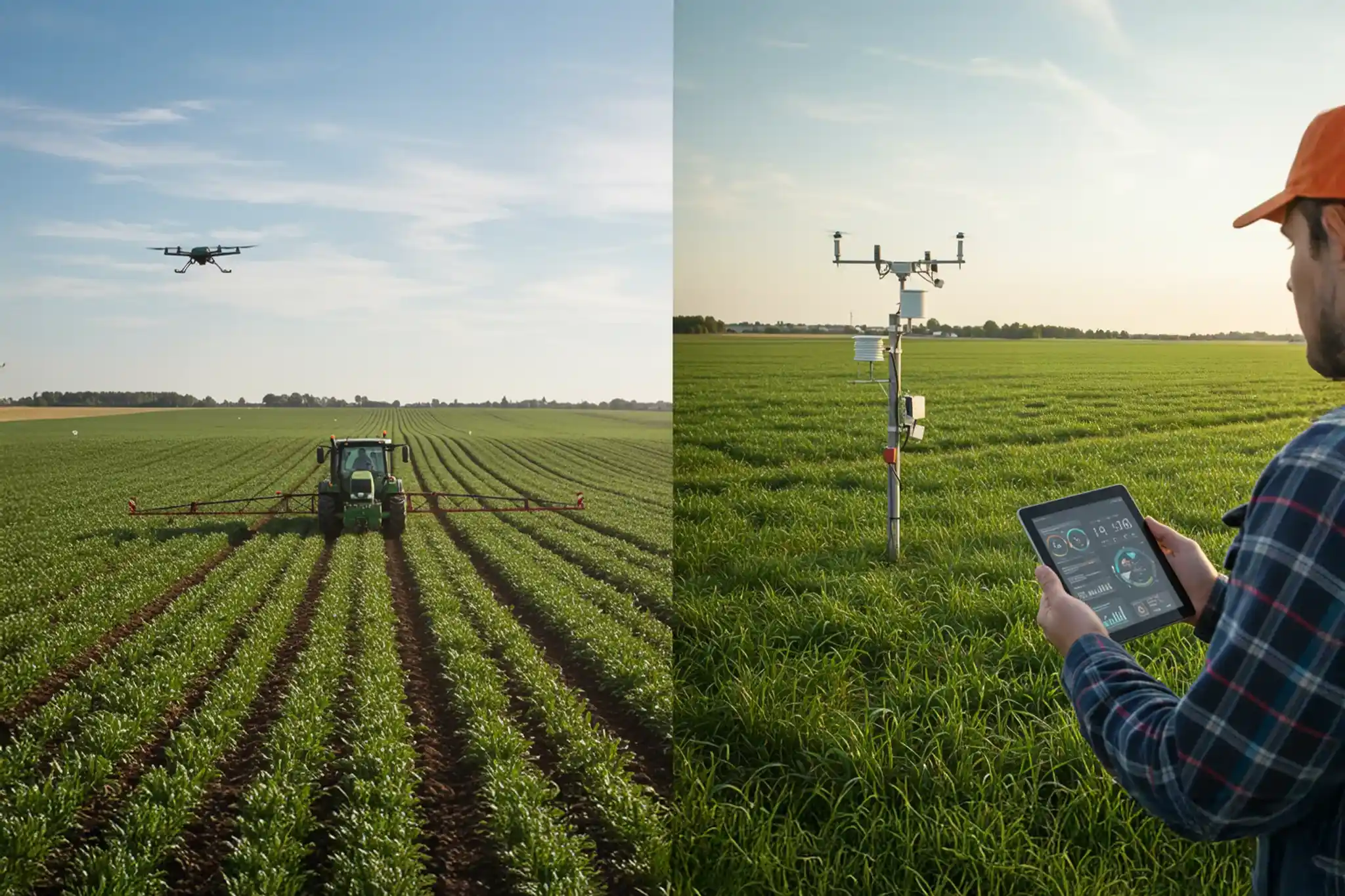
This course introduces students to the concepts, technologies and applications involved in precision farming (PF). This entails the use of ICT and some high-technology equipment for assessing field conditions and applying variable rates of production inputs for management of soil nutrients, weeds, pest & diseases. Topics include sampling procedures, and measurements of parameters through environmental sensors, GNSS, RS and PS. Data input into GIS or analysis using Geo-statistical & Mapping software to accomplish primary spatial data management tasks, creation of spatial variability maps for mechanized applications of farm inputs. Students will also be exposed to precision technologies in livestock production for locating as well as feeding, reproduction and health management. Students will participate in some hands-on experience in the use of enabling hardware and software in PF applications.
UB00702 (SECTION 701 UMSFLEC) ENGLISH FOR OCCUPTIONAL PURPOSES [1-2025/2026]
This course is designed to equip students with the English language skills necessary for the workplace by developing effective oral and written communication. The general objective is to prepare students to achieve Level B2 of the Common European Framework of Reference for Languages (CEFR). Students will learn to prepare, process, and produce relevant documents and engage in activities commonly practiced in professional settings. Key activities include practicing workplace-relevant expressions, preparing formal and informal documents, delivering informative presentations, and developing job-seeking skills.
UB00702 (SECTION 703 UMSFLEC-Sandakan) ENGLISH FOR OCCUPATIONAL PURPOSES [1-2025/2026]
This course is designed to equip students with the English language skills necessary for the workplace by developing effective
oral and written communication. The general objective is to prepare students to achieve Level B2 of the Common European
Framework of Reference for Languages (CEFR). Students will learn to prepare, process, and produce relevant documents, and
engage in activities commonly practiced in professional settings. Key activities include practicing workplace-relevant expressions,
preparing formal and informal documents, delivering informative presentations, and developing job-seeking skills.
UL03102(SEKSYEN 101, 102) MEDIA DAN MASYARAKAT - UMSKAL [SEMESTER 1-2024/2025]
This course exposes student with fundamental characteristics on the role of media in the society. The topics are (1) what are media, what are determinants and characteristics of media, what is the contradictory nature of media & what is the relationship between media and society (2) what is a media company and what are 12 key concepts in a media company (3) what are popular/mass media (4) what is technological innovation in media (5) what do media do to the society and what does society do to the media (6) media and the children (7) media and young adults (8) media and adults (9) media and the women and (10) media and the marginalized/underprivileged/disadvantaged/vulnerable people. Thus, after completing this course, students are equipped with fundamental characteristics on the role of media in the society.
 iTEL
iTEL