 iTEL
iTEL
Search results: 263
![KS30005 LATIHAN INDUSTRI [2-2023/2024]](https://itel.ums.edu.my/pluginfile.php/712683/course/overviewfiles/Image%20for%20LI%20ITEL.png)
KS30005 LATIHAN INDUSTRI [2-2023/2024]
The KS30005 Industrial Training course is a mandatory course of the curriculum for all Electronic Engineering (Computer) Engineering students enrolled in the Faculty of Engineering (FKJ). This prerequisite mandates that students must have successfully completed six semesters of their academic program to qualify for this training. The training constitutes a full-time engagement within an industrial or governmental setting, structured as a 5-credit hour course specifically designed for FKJ students.
![MH60104 MANAGEMENT OF HUMAN RESOURCES [1-2025/2026]](https://itel.ums.edu.my/pluginfile.php/1541358/course/overviewfiles/HRM%202.jpeg)
MH60104 MANAGEMENT OF HUMAN RESOURCES [1-2025/2026]
Management of Human Resources (HRM) module will focus on the formal systems devised for the management of people within an organization. The module consists of three major areas: staffing, employee compensation and benefits, and defining/designing work. This will expose the candidate to appreciate the purpose of HRM to maximize the productivity of an organization by optimizing the effectiveness of its employees. HRM module will focus on strategies and theories that are needed to know about recruiting, selecting, training, motivating and compensating people.
MJ10303 BIOCHEMISTRY [1-2023/2024]
This course presents an overview of the fundamental principles of biochemistry, describing and explaining the biomolecular composition of cells that constitute the human body, the structural nature of biomolecules, and the metabolic pathways that is in essential life processes.
MM10102 BASIC CLINICAL SKILLS AND FIRST AID [1-2025/2026]
Assalamualaikum and greetings to all fellow students. Welcome to module MM10102, session 2025/2026.
Module Coordinator:
Dr Allia Najmie binti Muhammad Yusuf
012-833 0105
allia.najmie@ums.edu.my
Deputy Coordinator:
Dr Nur Damia Iwani binti Zulkiflee
011-2193 3760
damia@ums.edu.my
MLT In-charge:
Mr Barblay Jolumas
014- 851 5868
![MM20405 Musculoskeletal system and skin [1-2024/2025]](https://itel.ums.edu.my/pluginfile.php/969221/course/overviewfiles/MM20405.png)
MM20405 Musculoskeletal system and skin [1-2024/2025]
1.0 COURSE DESCRIPTION:
This course is to study the clinical disorder caused by abnormal changes in structure, function and bone biochemistry, muscle, joints and skin. Clinical disorders that will be discussed are including rheumatoid arthritis, gout, psoriasis, osteoarthritis, osteomyelitis, and tumours, etc. These discussions will cover organ / tissue that involved aetiology, pathogenesis, diagnosis, laboratory investigation, and treatment. The prevention of clinical disorder will also be discussed.
2.0 COURSE OBJECTIVES:
The program is expected to ensure the students be able to:
- understand and appreciate the clinical disorders resulting from abnormal changes in the structure, function, and biochemistry of the muscles, skin, bones and joints.
- understand the importance of clinical disorders such as rheumatoid arthritis, gout, psoriasis , osteoarthritis, tumours, etc.
- study and understand the organs and tissues involved as well as the relevant pathogenesis, laboratory investigations, and treatment.
- study and understand the prevention of clinical disorders.
3.0 LEARNING OUTCOMES:
At the end of the course students will be able to:
- understand the etiology, pathogenesis, clinical features, morphology, diagnosis and guideline of management.
- contribute to medical expertise in different settings, both rural and urban to meet the needs of community.
- contribute to research, scientific writing and publishing and development of ideas and technology that will be adopted globally.
4.0 ASSESSMENT:
4.1: Formative assessment (continuous assessment):
carried out throughout the course = through monthly tests=20%;
- Seminar = 5%;
- Attitude & behavior = 5%;
- SM =10%.
Total Mark weightage = 40%.
4.2: Summative assessment:
By examination at the end of 1st and 2nd semesters.
For summative assessment, assess student’s Knowledge: through –
MCQ; MEQ; long Essay on Problem based questions & viva voce.
Assess student’s Skill: through - OSPE & OSCE
Marks Weightage = 60%
Final Exam Passed Marks = 65%
5.0 REFERENCES:
1. Kumar V, Abbas A.K, Aster J.C, 2015. Robbins and Cotran Pathologic Basis of Disease. 9th Edition. Elsevier Saunders.
2. Kumar V, Abbas A.K, Aster J.C, 2017. Robbins Basic Pathology. 10th Edition. Elsevier Saunders.
3. Colledge N R, Walker B R, Ralston S H, 2018. Davidson’s Principles and Practice of Medicine. 23rd Edition. Churchill Livingstone, Elsevier Saunders.
4. Rang, H.P., Ritter, J.M., et al. (2019). Rang & Dale’s Pharmacology, 9th Edition, Elsevier Churchill Livingstone, London.
5. Macleod's Clinical Examination 14th edition 2019 Elsevier Saunders.
All the best!
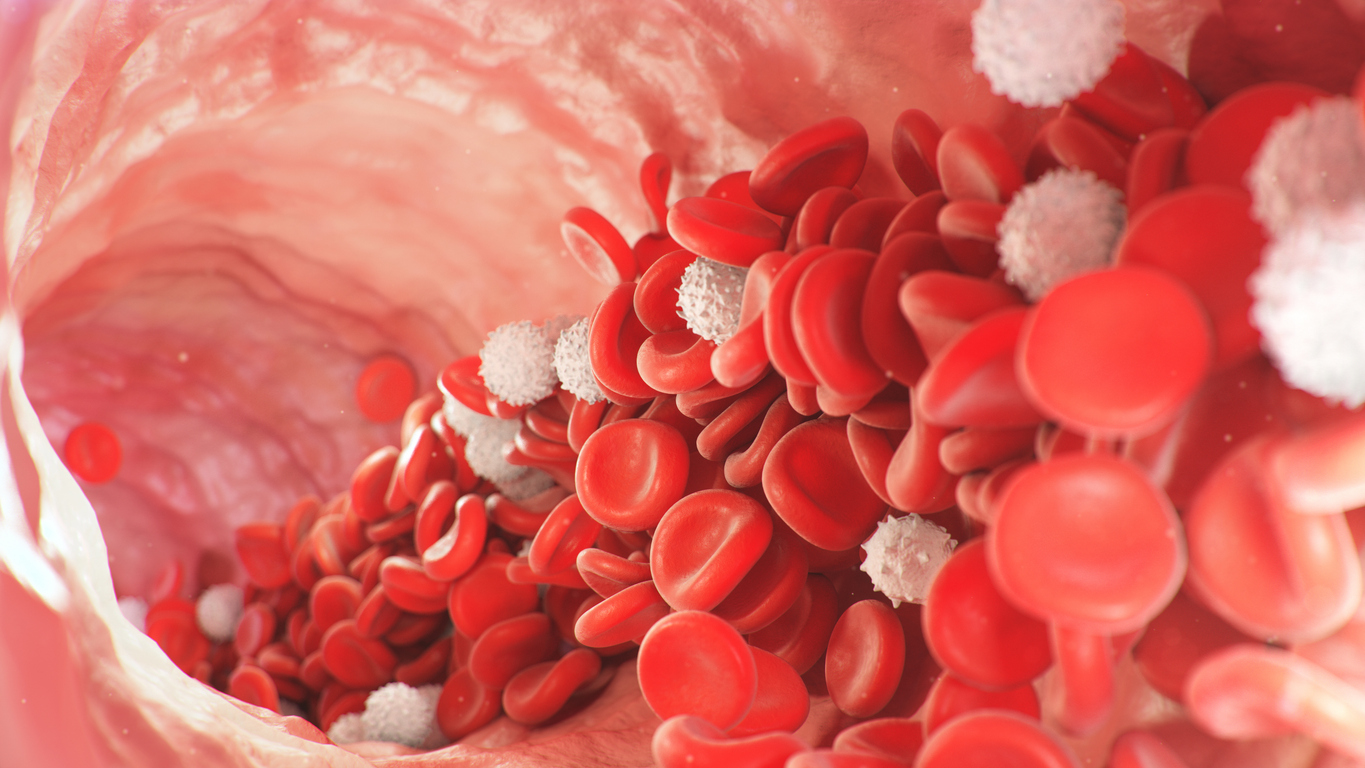
MM20605 BLOOD, LYMPHATIC, ENDOCRINE & IMMUNE SYSTEM [2-2025/2026]
Module Coordinator: Dr Aye Aye Wynn (HP 0109452532)
Deputy Coordinator: AP Dr Nor Haizura Abd Rani (HP 0173510525)
Course Description
This course will emphasize on Blood and lymphatic diseases such as anaemias, leukaemias and lymphomas. In addition, functional endocrine disorders such as hypofunction and hyperfunction of thyroid glands, parathyroid and adrenal glands are essential endocrine disorders and Immune mediated diseases.
Assessment methods
1.Formative Assessment
monthly tests=20%
Seminar = 5%
Attitude & behavior = 5%
SSM =5%
PBL =5%
Total Marks = 40%
2. Summative Assessment
End of second semester examination : MCQ = 18%, MEQ= 15%, long Essay= 15%, OSPE & OSCE = 12% (Total Marks= 60%)
Students must obtain total of 65 marks to pass the examination
REFERENCES
1. Kumar V, Abbas A.K, Aster J.C, 2015. Robbins and Cotran Pathologic Basis of Disease. 9th Edition. Elsevier Saunders.
2. Kumar V, Abbas A.K, Aster J.C, 2017. Robbins Basic Pathology. 10th Edition. Elsevier Saunders.
3. Colledge N R, Walker B R, Ralston S H, 2018. Davidson’s Principles and Practice of Medicine. 23rd Edition. Churchill Livingstone, Elsevier Saunders.
4. Rang, H.P., Ritter, J.M., et al. (2019). Rang & Dale’s Pharmacology, 9th Edition, Elsevier Churchill Livingstone, London.
5. Macleod's Clinical Examination 14th edition 2019 Elsevier Saunders.
6. A V Hoffbrand, Chowdary P, Collins G P. Loke J. (2024). Hoffbrand essential haematology. 9th edition.
ISBN: 978-1-394-16817-0. Wiley-Blackwell
![MM40708 Family Medicine & District Hospital Posting [1-2025/2026]](https://itel.ums.edu.my/pluginfile.php/1587589/course/overviewfiles/MM40708.jpg)
MM40708 Family Medicine & District Hospital Posting [1-2025/2026]
Course Overview
This posting, part of the Year 4 MBBS Phase II curriculum, provides students with clinical exposure to Family Medicine and District Hospital Practice. It aims to equip students with competencies to manage common health problems, understand the healthcare system, and deliver holistic, continuous, and coordinated care within the Malaysian context, especially in resource-limited settings such as Sabah.
Summary Statement
The Family Medicine and District Hospital Posting bridges primary and secondary care learning by emphasizing holistic, community-oriented, and evidence-based clinical practice. Through lectures, discussions, and clinical immersion, students develop essential competencies in comprehensive care, teamwork, and ethical professionalism, preparing them to function effectively as future family physicians or primary care providers.
![MM50310 Obstetrics & Gynaecology Senior Posting (OGSP) [1-2024/2025]](https://itel.ums.edu.my/pluginfile.php/971012/course/overviewfiles/WhatsApp%20Image%202024-09-30%20at%2009.30.45_0c321a97.jpg)
MM50310 Obstetrics & Gynaecology Senior Posting (OGSP) [1-2024/2025]
OGSP MM50310 is a module prepared for UMS final year undergraduates medical students to provide them with adequate clinical exposure, understand more basic physiology in obstetrics and gynaecology disorder as well as improve their communication skill towards patients and and medical communities. In this nine week rotation, they will be guided through lectures that emphasizes diseases and its management, bed side teaching in the hospital, ward rounds and ward work in the hospital such as observing or assisting in normal delivery, observing and assisting in delivery of placenta and repair of perineum. They also will be exposed to common ward procedures such as blood taking, CTG application and interpretation, induction of labour ,management of normal and abnormal labour and basic observation in postnatal ward. In the clinic they will learn and observe outpatient cases and also will learn cases for hysteroscopy and colposcopy.
At the end of this posting, they will be assessed via completion of log book and viva, theory papers such as One Best Answer (OBA), Modified Essay Question (MEQ) and Long Essay Questions (LEQ). To assess their history and physical examination skills, a clinical exam with real patient will be held and an OSCE will also be provided.
By the end of this course participants should be able to :
1. Describe adequate basic science and clinical knowledge in common obstetrics and gynaecological condition.
2. perform standard clinical skills of history taking, physical examination and procedures in common obstetric and gynaecological conditions
3. Propose diagnosis and management plan for patients with common obstetrics condition
4. Communicate effectively with colleaguse, patients, relatives and hospital staff
5. Demonstrate professionalism and ethics while approaching patients and families
LEARNING OBJECTIVES AND OUTCOMES:
At the end of the rotation, students should be able to :
1. Take a thorough obstetrics and gynaecological history, perform a proper physical examination and be able to formulate diagnosis and differential diagnosis
2. Formulate management plan and keep accurate clear records
3. Able to interprete common and basic investigations results and able to suggest related management plan
4. Understand guideline and hospital protocol
5. Understand appropriate referral pathway
6. Recognize and differentiate between elective and emergency cases
7. Know the common procedures in obstetrics and gynaecology
METHODS OF ASSESSMENT
|
CONTINOUS ASSESSMENT | |||
Logbook assessment and logbook viva | Raw Marks | Marks(%) | |
Logbook assessment | 100 | 20 | |
Logbook viva | Out of 10 marks | 10 | |
Two case write -up (one obstetrics and one gynaecology | 100 X 2= 200 | 10 | |
CONTINOUS ASSESSMENT TOTAL MARKS(%) | 40% | ||
END POSTING EXAMINATION 60% | |||
![MM50510 Paediatrics Senior Posting (PSP) [1-2023/2024]](https://itel.ums.edu.my/pluginfile.php/414914/course/overviewfiles/mm50510.png)
MM50510 Paediatrics Senior Posting (PSP) [1-2023/2024]
This Paediatric Senior Posting (PSP) is an essential part of medical education that will prepare students for the world of paediatric and beyond. This posting spans 9 weeks, during which the 8th week will be dedicated to exams, while the 9th week will provide a well deserved holiday break. The purpose of this posting is to consolidate the student’s knowledge and practical skills in managing common medical issues in paediatric patients. Throughout the posting period, students will be exposed to a wide range of paediatric cases, enabling them to develop clinical acumen, diagnostic skills and treatment strategies. Apart from that, they will learn to approach each case with an ethical perspective, recognizing the unique vulnerabilities and needs of paediatric patients. This senior posting is designed to equip the student with practical experience and confidence needed to excel as a house officer after graduation. Through lectures, students learn all must-know components of the teaching topics, and they are also encouraged to self-learn some should-know and good-to-know topics. Students take turns taking the lead in preparation and presentation of assigned subjects during small group discussions (SGD) and seminars. This allows them to practise self-learning skills, the art and etiquette of delivering medical information, and brainstorming. It is hoped that it will act as a significant stepping stone on the road to becoming a capable and compassionate medical practitioner who can provide paediatric patients with the greatest standard of care, as well as serve as inspiration for them to pursue paediatrics as their future career of choice.
![MM50510 Paediatrics Senior Posting (PSP) [1-2024/2025]](https://itel.ums.edu.my/pluginfile.php/971030/course/overviewfiles/Frontpage.png)
MM50510 Paediatrics Senior Posting (PSP) [1-2024/2025]
This Paediatric Senior Posting (PSP) is an essential part of medical education that will prepare students for the world of paediatric and beyond. This posting spans 9 weeks, during which the 8th week will be dedicated to exams, while the 9th week will provide a well deserved holiday break. The purpose of this posting is to consolidate the student’s knowledge and practical skills in managing common medical issues in paediatric patients. Throughout the posting period, students will be exposed to a wide range of paediatric cases, enabling them to develop clinical acumen, diagnostic skills and treatment strategies. Apart from that, they will learn to approach each case with an ethical perspective, recognizing the unique vulnerabilities and needs of paediatric patients. This senior posting is designed to equip the student with practical experience and confidence needed to excel as a house officer after graduation. Through lectures, students learn all must-know components of the teaching topics, and they are also encouraged to self-learn some should-know and good-to-know topics. Students take turns taking the lead in preparation and presentation of assigned subjects during small group discussions (SGD) and seminars. This allows them to practise self-learning skills, the art and etiquette of delivering medical information, and brainstorming. It is hoped that it will act as a significant stepping stone on the road to becoming a capable and compassionate medical practitioner who can provide paediatric patients with the greatest standard of care, as well as serve as inspiration for them to pursue paediatrics as their future career of choice.
![NE30803 KESELAMATAN DAN PERATURAN MAKANAN [2-2022/2023]](https://itel.ums.edu.my/pluginfile.php/37600/course/overviewfiles/Food%20Safety.jpeg)
NE30803 KESELAMATAN DAN PERATURAN MAKANAN [2-2022/2023]
The course emphasis is on importance of food safety and legislative systems in ensuring foods sold in the market are safe and achieve certain minimum standards. The content covers food policy and regulations in the country (Food Act 1983 and Food Regulations 1985) as well as other international standards or guidelines by international organizations such as Codex Alimentarius Commission (CAC), World Health Organization (WHO) and Food & Drug Administration (FDA) for global trade in foods. Students will be exposed to food safety and quality system (GMP, HACCP, ISO 22000, Halal) and guidelines on import requirements of some countries. In addition, students will be introduced with various aspects of quality assurance and its roles in food industry particularly on certain high-risk foods such as poultry and meat products, dairy products and vegetables/fruits. Graduate competency on legislative issues and standards of foods is important to ensure food produced follow strictly to the specification and standards, either for domestic uses or export markets.
![NE40502 PEMAKANAN MOLEKULAR [1-2024/2025] [HY07]](https://itel.ums.edu.my/pluginfile.php/961850/course/overviewfiles/Molecular%20Nutrition.png)
NE40502 PEMAKANAN MOLEKULAR [1-2024/2025] [HY07]
This course serves as an introduction to nutrition at the molecular level, focusing on the interactions between nutrients and genes. As an emerging field in nutrition research, students will explore how nutrients affect gene expression and the role of genetics in nutrition-related diseases, including Inborn Errors of Metabolism (IEM). The course emphasizes the application of scientific research findings to understand nutrient-gene interactions and their effects on human health.
![NE41602 PERUNDANGAN DAN PIAWAIAN MAKANAN [2-2024/2025]](https://itel.ums.edu.my/pluginfile.php/1319339/course/overviewfiles/food%20law.jpg)
NE41602 PERUNDANGAN DAN PIAWAIAN MAKANAN [2-2024/2025]
This course provides technical knowledge on Malaysia and international food legislation and standards. This gives competitive advantage to the student in exploring various regulatory requirements from different countries associated with trade and marketing of foods based on FAO/WHO Codex Alimentarius, an internationally recognized system for food standards/regulations. Compliance to laws, regulations, policy and guidelines are important to ensure foods produced are safe for consumption and meeting the demands of the current needs besides facilitating the international food trade. Therefore, food professionals should always keep up with the regulatory and legislative developments affecting an ever changing food industry. The code of practice as a professional Food Technologist/Scientists will be also discussed in this course.
![NE41602 PERUNDANGAN DAN PIAWAIAN MAKANAN [2-2025/2026]](https://itel.ums.edu.my/pluginfile.php/1907902/course/overviewfiles/food%20law.jpg)
NE41602 PERUNDANGAN DAN PIAWAIAN MAKANAN [2-2025/2026]
This course provides technical knowledge on Malaysia and international food legislation and standards. This gives competitive advantage to the student in exploring various regulatory requirements from different countries associated with trade and marketing of foods based on FAO/WHO Codex Alimentarius, an internationally recognized system for food standards/regulations. Compliance to laws, regulations, policy and guidelines are important to ensure foods produced are safe for consumption and meeting the demands of the current needs besides facilitating the international food trade. Therefore, food professionals should always keep up with the regulatory and legislative developments affecting an ever changing food industry. The code of practice as a professional Food Technologist/Scientists will be also discussed in this course.
![NF20402 MAKANAN DAN BUDAYA [1-2024/2025]](https://itel.ums.edu.my/pluginfile.php/961880/course/overviewfiles/NF20402%20MUKA%20HADAPAN.png)
NF20402 MAKANAN DAN BUDAYA [1-2024/2025]
This course is a theoretical and empirical exploration of human food choices from an ecological, political and sociological perspective. The course is designed to discuss the socio-cultural dimensions of food production, preparation and consumption that included dimensions of individual, family, community and societal structures, as well as ideological, religious and cultural identities embodied in gender, race, ethnicity and socioeconomic status.
![NF20402 MAKANAN DAN BUDAYA [1-2025/2026]](https://itel.ums.edu.my/pluginfile.php/1585489/course/overviewfiles/nf20402%20.jpg)
NF20402 MAKANAN DAN BUDAYA [1-2025/2026]
This course examines the interrelationship between food and culture from ecological, political, and sociological perspectives, with emphasis on the socio-cultural dimensions of food production, preparation, and consumption across individual, family, and societal contexts. It introduces students to cultural traditions, religious influences, and food heritage in Malaysia, including Peninsular Malaysia, Sabah, and Sarawak, while engaging with global perspectives. Teaching and learning strategies include interactive lectures supported by technology-enhanced platforms such as iTEL UMS and multimedia resources, with assessments comprising assignments, presentations, quizzes, and examinations. By the end of the course, students will be able to distinguish the role of food and culture in social, symbolic, and political contexts, interpret human habits and cultural practices from multiple perspectives, and discuss food beliefs and practices across diverse cultures through case studies. Elements of the Future Ready Curriculum including critical and creative thinking, intercultural competence, digital literacy, and ethical awareness—are embedded throughout the course.
![NF20502 MAKANAN DAN BUDAYA [2-2022/2023]](https://itel.ums.edu.my/pluginfile.php/37171/course/overviewfiles/Introduction%20of%20NF20502.jpg)
NF20502 MAKANAN DAN BUDAYA [2-2022/2023]
This course is a theoretical and empirical exploration of human food choices from an ecological, political and sociological perspective. The course is designed to discuss the socio-cultural dimensions of food production, preparation and consumption that included dimensions of individual, family, community and societal structures, as well as ideological, religious and cultural identities embodied in gender, race, ethnicity and socioeconomic status.
NF30502 PERAKAUNAN PERKHIDMATAN MAKANAN [2-2025/2026]
Course Description
The main emphasis of this course is to provide students with financial and management accounting concepts, techniques and tools. This course introduces accounting principles and methods to record transactions using double entry system. It also introduces the methods to prepare financial statements and the components of financial statements. Some of the topics discussed in this course focus on the roles and responsibility of management in an organization. Students will also be exposed to how to provide, interpret and evaluate management accounting information in the decision-making process. Development of managerial decision-making skills is stressed through the coverage of the following topics: cost behaviour, cost-volume-profit analysis, profit planning and budgeting, standard costs and variance analysis, and relevant costs.
Learning Outcomes
At the end of the course the students will be able to:
1) Analyse the accounting concepts, principles, and procedures in the accounting cycle of financial accounting and management accounting in the context of business organisation (PLO1,C4).
2) Demonstrate accounting and management accounting information to support organization's decision-making. (PLO5,C5).
3) 1Analyze numerical financial and managerial accounting techniques to accurately assess organization's financial statement and business performance (C3, PLO7).
Learning Resources
1) Jerry J. Weygandt, Paul D. Kimmel, & Jill E. Mitchell. (2024). Accounting principles (15th ed.). John Wiley & Sons.
2) Fundamentals of Accounting for Non-Accounting Students Wan Mohd Wan Ibrahim, Mohd Rizal Palil, & Mohd Ridzwan Che Abdul Rahman. (2017). Fundamentals of accounting for non-accounting students. Oxford University Press.
3) Fatimah Abd Rauf & Rohana Mahmud. (2018). Financial accounting for non-accounting students (6th ed.). McGraw-Hill Education.
4) Managerial Accounting Ray H. Garrison, Eric W. Noreen, & Peter C. Brewer. (2024). Managerial accounting (18th ed.). McGraw‑Hill Education.
The main emphasis of this course is to provide students with financial and management accounting concepts, techniques and tools. This course introduces accounting principles and methods to record transactions using double entry system. It also introduces the methods to prepare financial statements and the components of financial statements. Some of the topics discussed in this course focus on the roles and responsibility of management in an organization. Students will also be exposed to how to provide, interpret and evaluate management accounting information in the decision-making process. Development of managerial decision-making skills is stressed through the coverage of the following topics: cost behaviour, cost-volume-profit analysis, profit planning and budgeting, standard costs and variance analysis, and relevant costs.
Learning Outcomes
At the end of the course the students will be able to:
1) Analyse the accounting concepts, principles, and procedures in the accounting cycle of financial accounting and management accounting in the context of business organisation (PLO1,C4).
2) Demonstrate accounting and management accounting information to support organization's decision-making. (PLO5,C5).
3) 1Analyze numerical financial and managerial accounting techniques to accurately assess organization's financial statement and business performance (C3, PLO7).
Learning Resources
1) Jerry J. Weygandt, Paul D. Kimmel, & Jill E. Mitchell. (2024). Accounting principles (15th ed.). John Wiley & Sons.
2) Fundamentals of Accounting for Non-Accounting Students Wan Mohd Wan Ibrahim, Mohd Rizal Palil, & Mohd Ridzwan Che Abdul Rahman. (2017). Fundamentals of accounting for non-accounting students. Oxford University Press.
3) Fatimah Abd Rauf & Rohana Mahmud. (2018). Financial accounting for non-accounting students (6th ed.). McGraw-Hill Education.
4) Managerial Accounting Ray H. Garrison, Eric W. Noreen, & Peter C. Brewer. (2024). Managerial accounting (18th ed.). McGraw‑Hill Education.
 iTEL
iTEL