 iTEL
iTEL
Search results: 29
RC21003(UMSFLEC) Biometri [2-2025/2026]
Welcome to the course.
During the semester,
This course is designed to provide a learning environment for undergraduate students to acquire skills in basic descriptive and inferential statistics related to Agriculture. It involves learning about the various ways of describing, analysing and interpreting the results of the analysis of data. Students will learn how to do the data analysis using Excel. This course will provide important fundamentals to enable the students to carry out their final year research projects. The student learning outcomes achieved in this course will support the programme learning outcome (cognitive skills and numeracy skills learning domains) that students should be able to identify crop production problems, apply knowledge to solve these problems, and suggest ways to solve them using numerical and analytical approaches. At the end of this course, students should be able to:
•Describe some basic statistical concepts.
•Distinguish between descriptive statistics and inferential statistics.
•Conduct hypothesis testing for the selected parametric and non-parametric tests in order to solve biological problems.
Enjoy the course, have fun and work hard.
Aim for A+
You can do it.
RC30903/RL30903(UMSFLEC) REKABENTUK EKSPERIMEN DAN ANALISIS [1-2025/2026] - Active
Welcome to the course.
During the semester,
Students will learn concepts, principles and methods/steps in setting up an agricultural experiment. Students will also learn statistical analysis based on the experimental design used. The experimental designs included are Completely Randomized, Randomized Complete Block, Latin Square and Split Plot Designs as well as factorial experiments. Suitable ways and methods of analyzing data for these experimental designs will also be taught.
Enjoy the course, have fun and work hard.
Aim for A+
You can do it.
During the semester,
Students will learn concepts, principles and methods/steps in setting up an agricultural experiment. Students will also learn statistical analysis based on the experimental design used. The experimental designs included are Completely Randomized, Randomized Complete Block, Latin Square and Split Plot Designs as well as factorial experiments. Suitable ways and methods of analyzing data for these experimental designs will also be taught.
Enjoy the course, have fun and work hard.
Aim for A+
You can do it.
RC31403(UMSFLEC) Perladangan Persis [2-2025/2026]
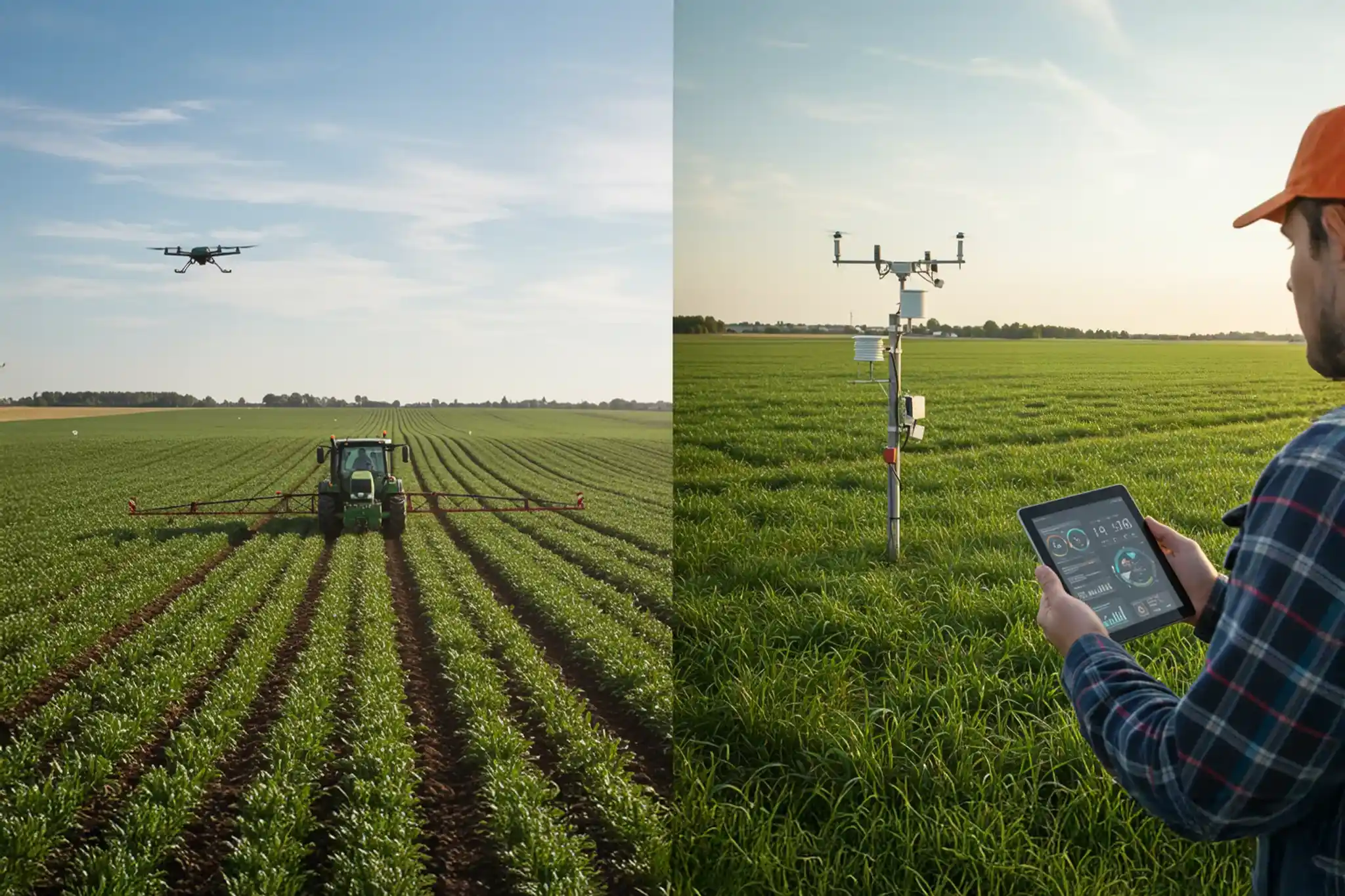
This course introduces students to the concepts, technologies and applications involved in precision farming (PF). This entails the use of ICT and some high-technology equipment for assessing field conditions and applying variable rates of production inputs for management of soil nutrients, weeds, pest & diseases. Topics include sampling procedures, and measurements of parameters through environmental sensors, GNSS, RS and PS. Data input into GIS or analysis using Geo-statistical & Mapping software to accomplish primary spatial data management tasks, creation of spatial variability maps for mechanized applications of farm inputs. Students will also be exposed to precision technologies in livestock production for locating as well as feeding, reproduction and health management. Students will participate in some hands-on experience in the use of enabling hardware and software in PF applications.
![RL21103/RL21103(UMSFLEC 701) PENGELUARAN RUMINAN KECIL [1-2024/2025]](https://itel.ums.edu.my/pluginfile.php/961346/course/overviewfiles/shutterstock_1946420599.jpg)
RL21103/RL21103(UMSFLEC 701) PENGELUARAN RUMINAN KECIL [1-2024/2025]
This course provides a comprehensive and systematic study of small ruminant husbandry, addressing key elements such as breeding, nutrition, management, housing, equipment, health, and welfare. The course focuses on the production potential of small ruminants in various systems and emphasizes advanced techniques for improving productivity, particularly in the areas of milk, meat, and fiber production. Additionally, students will explore effective strategies for the marketing of small ruminant products. Through this course, students will gain both theoretical knowledge and practical skills essential for optimizing small ruminant farming operations.
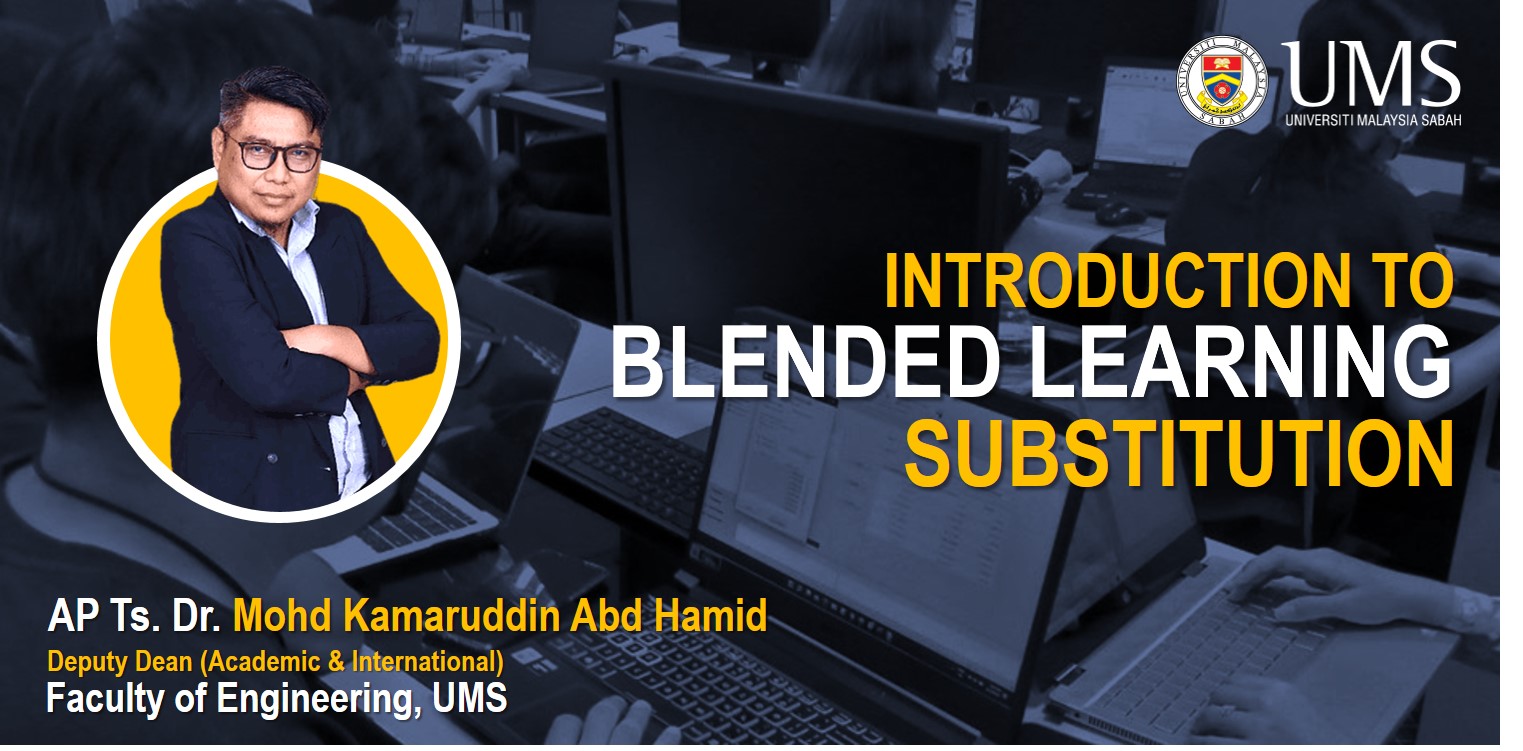
SHARING ON BLENDED LEARNING SUBSTITUTION IMPLEMENTATION
The Blended Learning Substitution (BLS) sharing aims to assist educators at UMS FKJ in effectively implementing blended learning. By providing practical guidance and strategies, the sharing equips educators to seamlessly integrate online resources into traditional teaching methods. The ultimate goal is to establish the sharing as a comprehensive reference for educators as they adopt BLS techniques, enhancing their teaching approaches and enriching the learning experience for students.
SQ21603(PLUMS) IMMUNOLOGI HAIWAN AKUAKULTUR [2-2022/2023]
This course will provide students to develop
knowledge among students about the fish’s immune system, its interaction with
fish pathogens and responses to stimulation and vaccines. This knowledge is developed through lectures,
individual or group work, written assignment submissions and through laboratory
courses. Course provides an overview of
the immune system in fish with emphasis on aquaculture species. The student will
learn about the different organs,cells and molecules and how these work and
collaborate, and how cells and functions are regulated and stimulated. The
students are especially to develop knowledge about vaccines and immune
stimulants for aquatic organisms with emphasis on the immune prophylaxis for
aquaculture species.
UB00702 (SECTION 701 UMSFLEC) ENGLISH FOR OCCUPTIONAL PURPOSES [1-2025/2026]
This course is designed to equip students with the English language skills necessary for the workplace by developing effective oral and written communication. The general objective is to prepare students to achieve Level B2 of the Common European Framework of Reference for Languages (CEFR). Students will learn to prepare, process, and produce relevant documents and engage in activities commonly practiced in professional settings. Key activities include practicing workplace-relevant expressions, preparing formal and informal documents, delivering informative presentations, and developing job-seeking skills.
UB00702 (SECTION 703 UMSFLEC-Sandakan) ENGLISH FOR OCCUPATIONAL PURPOSES [1-2025/2026]
This course is designed to equip students with the English language skills necessary for the workplace by developing effective
oral and written communication. The general objective is to prepare students to achieve Level B2 of the Common European
Framework of Reference for Languages (CEFR). Students will learn to prepare, process, and produce relevant documents, and
engage in activities commonly practiced in professional settings. Key activities include practicing workplace-relevant expressions,
preparing formal and informal documents, delivering informative presentations, and developing job-seeking skills.
UL03102(SEKSYEN 101, 102) MEDIA DAN MASYARAKAT - UMSKAL [SEMESTER 1-2024/2025]
This course exposes student with fundamental characteristics on the role of media in the society. The topics are (1) what are media, what are determinants and characteristics of media, what is the contradictory nature of media & what is the relationship between media and society (2) what is a media company and what are 12 key concepts in a media company (3) what are popular/mass media (4) what is technological innovation in media (5) what do media do to the society and what does society do to the media (6) media and the children (7) media and young adults (8) media and adults (9) media and the women and (10) media and the marginalized/underprivileged/disadvantaged/vulnerable people. Thus, after completing this course, students are equipped with fundamental characteristics on the role of media in the society.
 iTEL
iTEL